
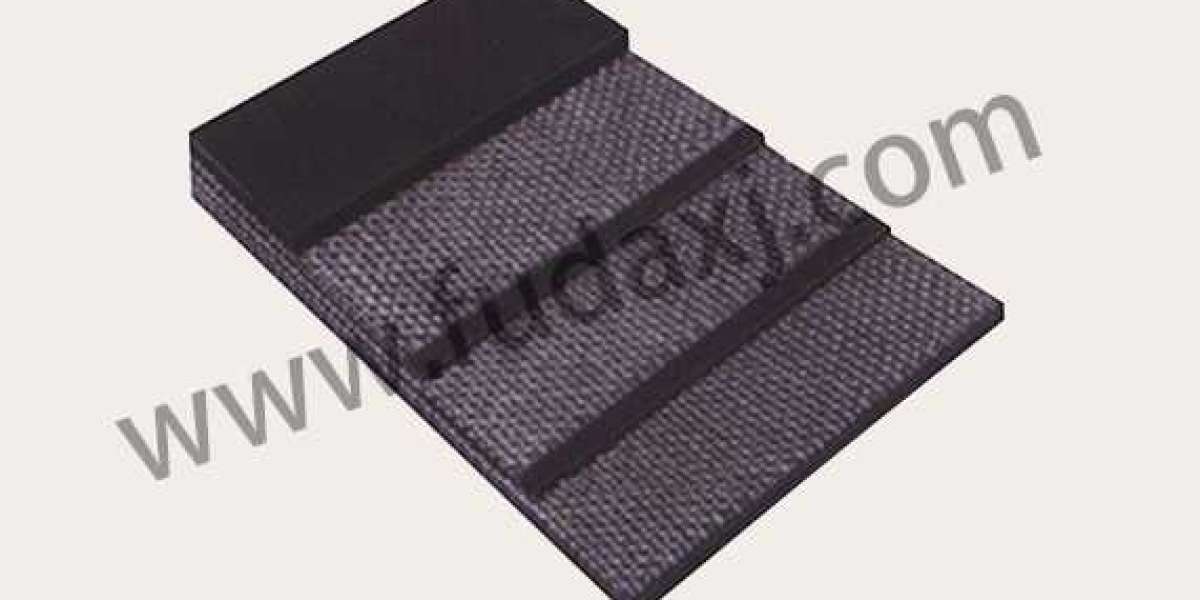
An EP Conveyor Belt derives its designation from the specific fabric reinforcement utilized in its carcass construction: polyester in the warp direction and polyamide in the weft direction. This engineered combination capitalizes on the distinct mechanical properties of each fiber type to achieve optimal conveyor belt performance. The polyester warp yarns, oriented longitudinally along the belt length, provide high tensile strength with minimal elongation under load. Polyester's low moisture absorption, typically below 0.4 percent, ensures dimensional stability in humid operating environments where nylon-based alternatives would elongate significantly. The weft yarns, oriented transversely across the belt width, utilize polyamide fibers selected for their exceptional impact resistance and flexibility. This fiber-specific orientation creates a balanced fabric structure where each component contributes its characteristic strengths to the composite EP Conveyor Belt construction.
The manufacturing process for EP Conveyor Belt carcass fabric begins with twisting multiple individual filaments into yarns of specified denier and tenacity. Warp yarns are sized with protective coatings to withstand abrasion during weaving, then wound onto beams for installation on rapier or air-jet weaving looms. The weaving pattern, typically plain weave or straight warp weave, determines the fabric's mechanical properties and adhesion characteristics. Plain weave configurations provide maximum fabric stability with warp and weft yarns crossing in alternating sequence. Straight warp constructions allow higher warp density, increasing tensile capacity for heavy-duty applications. After weaving, the greige fabric undergoes heat-setting under controlled tension, stabilizing dimensions and relaxing internal stresses. The finished EP Conveyor Belt carcass fabric is characterized by its rated strength designation, expressed in Newtons per millimeter of belt width, with common ratings ranging from EP100 through EP800 and specialized constructions extending to EP2000 or higher.
The adhesion between EP Conveyor Belt fabric plies and between carcass and cover rubber compounds is achieved through dip-coating processes utilizing resorcinol-formaldehyde-latex chemistry. The dipped fabric passes through drying and curing ovens where the RFL solution penetrates fiber bundles and forms chemical bonds with both polyester and polyamide fiber surfaces. This adhesion layer provides the shear strength necessary to maintain ply integrity under flexing and impact loading. Multiple fabric plies, typically two to six depending on required tensile rating, are assembled with intermediate rubber skim coats that further enhance ply adhesion and provide flexibility. The precise engineering of fiber orientation, fabric geometry, and chemical adhesion systems enables EP Conveyor Belt to deliver the tensile capacity, impact resistance, troughability, and dimensional stability required for bulk material transport across mining, quarrying, cement, and industrial processing applications.