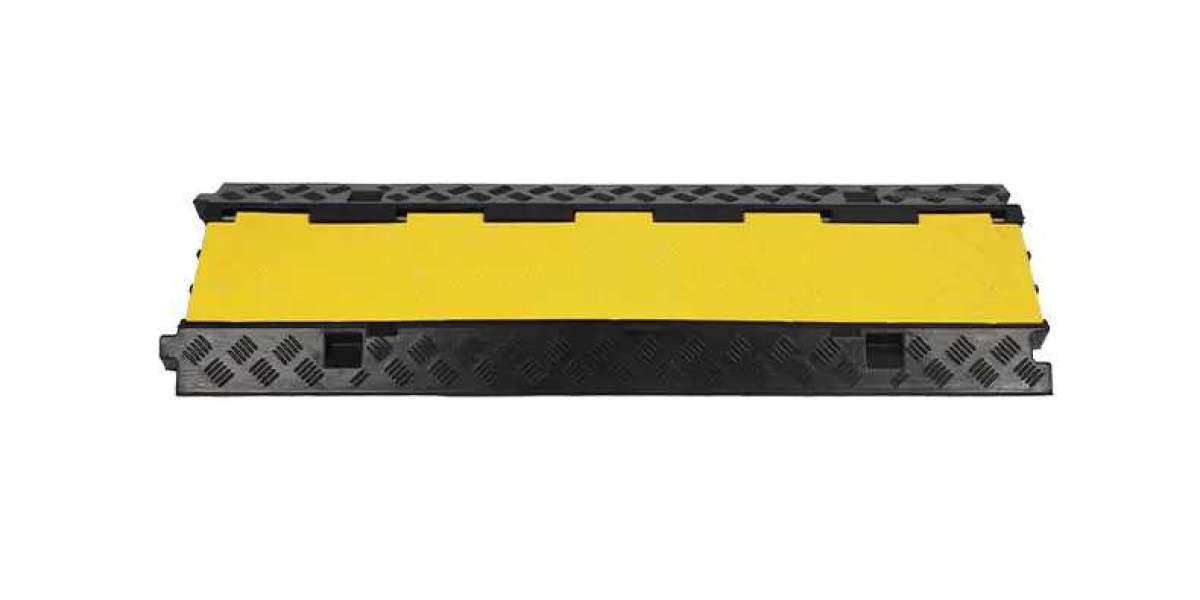
Bringing a new cable ramp design from a mere sketch to a market-ready product is a meticulous journey that blends engineering, material science, and practical ergonomics. For a forward-thinking manufacturing facility, this process is not merely about creating a new mold; it's a comprehensive phase of innovation and validation that ensures the final product solves a real-world problem effectively, safely, and durably. The path from concept to concrete involves several critical stages.
Stage 1: Identifying the Need and Conceptual Design
The process rarely starts in a vacuum. It is typically triggered by specific market demands or client requests that current products cannot fully address. This could be a need for a ramp with a unique weight rating, a non-standard channel configuration for specialized cables, a new composite material for chemical resistance, or an ergonomic feature for easier handling. Design engineers, often in consultation with sales teams and key clients, translate this need into initial concept drawings and 3D computer-aided design (CAD) models. At this stage, considerations include primary dimensions, load-bearing structure, wall thickness, ribbing patterns for strength, interlocking mechanisms, and surface textures for slip resistance. The focus is on creating a functional form that meets the core mechanical requirement.
Stage 2: Digital Simulation and Analysis
Before any physical material is committed, the digital prototype undergoes rigorous analysis. Using Finite Element Analysis (FEA) software, engineers simulate how the design will perform under various stress conditions. They apply virtual loads to the model to identify potential weak points, areas of high stress concentration, or deformation. This digital testing allows for rapid and cost-effective iterations of the design—adjusting wall thickness here, adding a support rib there—to optimize strength-to-weight ratio and ensure it will meet or exceed its intended safety rating. Computational fluid dynamics might also be used to analyze how the design affects airflow and cable cooling if relevant.
Stage 3: Prototype Tooling and First Article Creation
Once the digital design is finalized, the crucial step of prototype tooling begins. For plastic cable ramps, this usually means machining a single-cavity mold prototype, often from aluminum, which is faster and less costly than the final production-grade steel mold. This "soft tooling" is used to produce a limited run of first articles. The creation of this first physical prototype is a landmark moment. It allows the team to hold, test, and visually inspect the product. They check for issues not easily caught on screen: the feel of the interlock, the exact finish of the surface, the ease of demolding, and the true color.
Stage 4: Functional and Field Testing
The first articles are then subjected to real-world testing. This goes beyond standard lab tests for load capacity (though that is done). Prototypes are sent to trusted partners—construction firms, event staging companies, or industrial facilities—for field trials. Feedback on handling, durability in specific environments, compatibility with existing ramp systems, and overall user experience is gathered. Does it connect seamlessly with other brands? Is it truly easier for a two-person team to carry? How does it perform after being run over by heavy machinery multiple times? This feedback loop is invaluable and often leads to final tweaks in the design before the high-cost production tooling is commissioned.
Stage 5: Final Tooling and Production Readiness
Incorporating all learnings from the prototype phase, the final design is locked. The investment is then made in hard, production-grade tooling, typically made from hardened steel to withstand millions of cycles in an injection molding press. A final pre-production run is conducted to ensure the tooling produces perfect parts and that the entire manufacturing process—from raw material feed to cooling time to post-processing—is calibrated. Only after this complete cycle of design, simulation, prototyping, testing, and refinement does the new cable ramp design enter the full-scale production phase at a facility, ready to meet the market need that initiated its creation. This thorough process underscores the engineering rigor behind what might seem like a simple product, ensuring reliability and performance from the very first unit sold.