
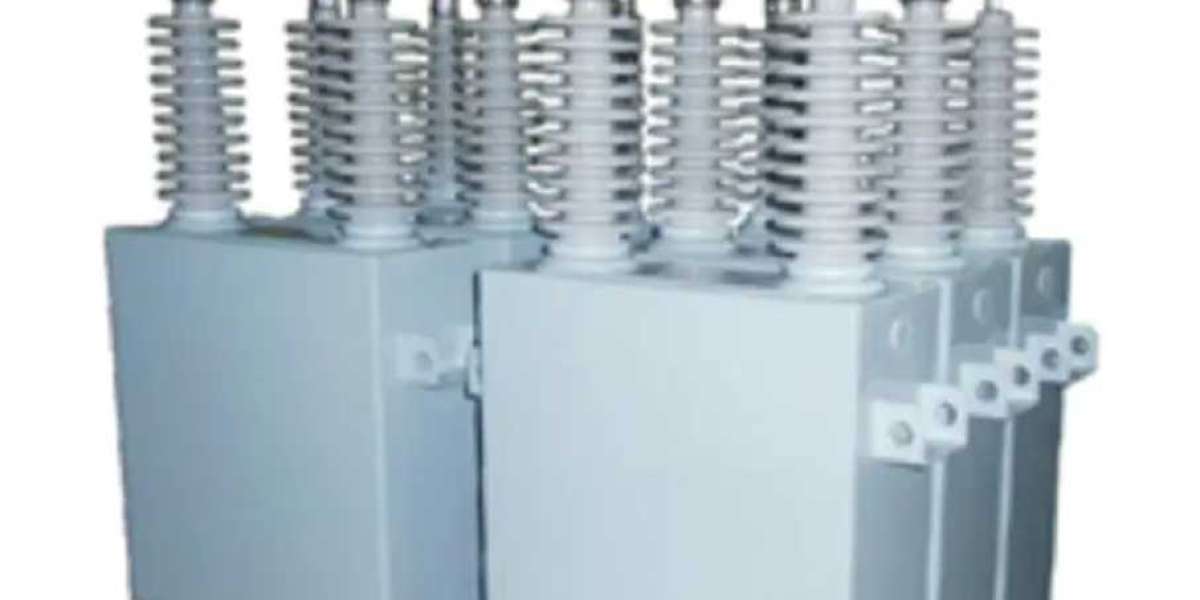
The Imperative of Intrinsic Safety
In the realm of electrical power infrastructure, high voltage capacitor units are indispensable for functions like power factor correction, voltage stabilization, and harmonic filtering. However, their operation involves storing significant amounts of electrical energy at dangerous potentials. A catastrophic failure can result in violent rupture, fire, or the release of toxic materials. Therefore, safety is not an added feature but the foundational principle governing their design. Modern engineering integrates multiple, redundant protection systems directly into the unit's architecture to mitigate risks to both personnel and the surrounding electrical network. These features address the primary hazards: internal overpressure, dielectric breakdown, and residual charge.
Primary Protection: Pressure-Based Disconnect and Segregation
The most critical and immediate threat is an internal fault causing rapid gas generation and pressure buildup. To prevent a violent explosion, units are equipped with a pressure-sensitive disconnecting device. This is often a mechanically actuated diaphragm or a bimetallic switch that permanently and irreversibly breaks the internal electrical connection to the failed capacitor section the moment overpressure is detected. This action electrically isolates the faulty element, often before the case ruptures. To contain any potential case breach, robust external enclosures made of corrosion-resistant steel are standard. Furthermore, for larger bank installations, individual capacitor fusing is employed. Each unit has a dedicated external fuse with a carefully selected time-current characteristic. This fuse acts as the first line of defense for internal faults, clearing the failed unit from the circuit before it can damage adjacent units or cause a cascading failure.
Dielectric and Thermal Management Systems
The heart of safety lies in preventing the fault in the first place. This begins with the dielectric system. Advanced all-film dielectric materials, impregnated with biodegradable or less-flammable fluids, significantly reduce the risk of failure compared to older PCB-filled units. The design of the internal series/parallel connections includes internal discharge resistors. These resistors are permanently connected across each capacitor element, ensuring that stored charge is safely drained to a safe voltage level (typically below 50V) within a mandated time (e.g., 5 or 10 minutes) after the unit is disconnected from the line. This protects maintenance personnel from electric shock. Additionally, thermal protection is integrated. Temperature sensors or thermal fuses embedded within the unit can trigger an alarm or a disconnect signal if operating temperatures exceed safe limits due to overload, poor ventilation, or harmonic distortion.
Design for Service and End-of-Life
Safety extends to installation, maintenance, and disposal. Units feature clearly visible, permanently marked warning labels indicating high voltage, the need for safe discharge procedures, and any specific environmental cautions. For ease of safe handling, secure lifting points and grounding terminals are integral. Modern designs also prioritize environmental safety. The use of non-PCB, non-toxic dielectric fluids and fully sealable constructions prevents soil and water contamination in case of leakage. At end-of-life, designs that facilitate easier disassembly and material separation are becoming more prevalent, supporting responsible recycling and reducing hazardous waste. Ultimately, a well-designed high voltage capacitor unit is a testament to defensive engineering, where every component and system is evaluated not just for its electrical function, but for its role in preventing and containing failure, thereby ensuring the reliable and safe operation of the power grid.