The Leap from Simple Shaping to Integrated Manufacturing
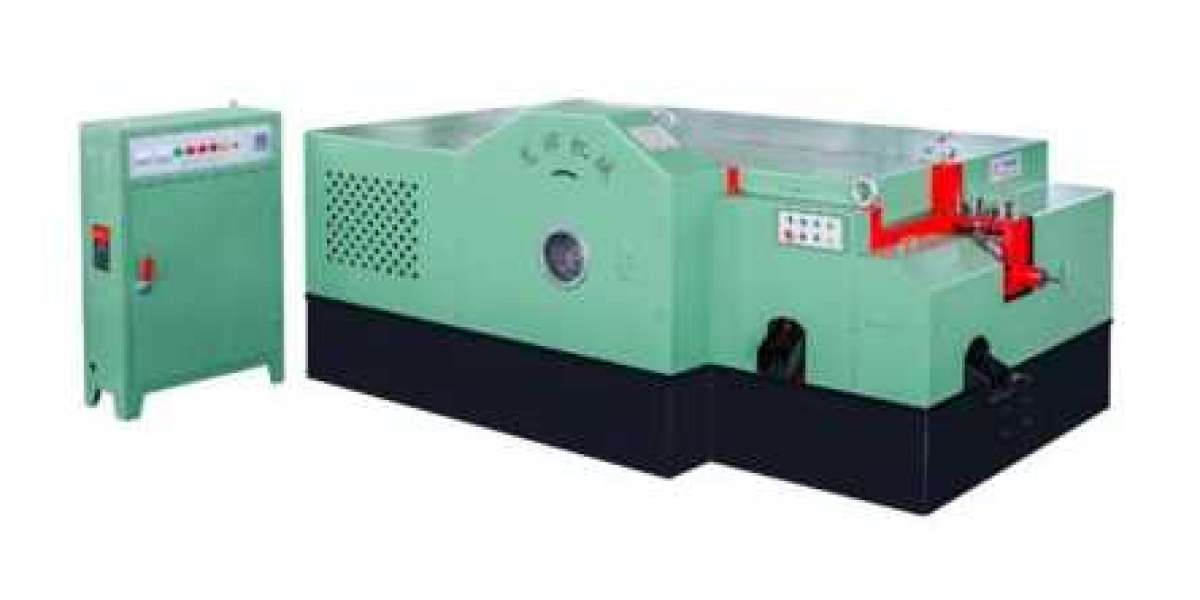
In the high-volume production of metal fasteners and complex small parts, the choice of forming technology directly dictates efficiency, part complexity, and unit cost. While single-station cold heading machines excel at simple operations like basic upsetting or extrusion, their limitations become stark when facing parts requiring multiple, distinct shaping steps. This is where the multi-station cold heading forming machine represents a paradigm shift, transforming a series of separate operations into a seamless, automated, and highly efficient integrated manufacturing cell. The advantages of this technological leap are profound and multifaceted.
Unmatched Production Efficiency and Throughput
The most immediate advantage is a dramatic increase in production speed and output consistency. A single-station machine must complete all forming steps in one blow or require the part to be manually or mechanically transferred to secondary machines for subsequent operations. This creates bottlenecks, increases handling time, and complicates workflow.
In contrast, a multi-station cold heading forming machine is designed as a continuous transfer system. A single length of wire or bar stock is fed into the machine, precisely cut into a blank (slug), and then automatically transferred through a sequence of stations—typically between 2 and 6 or more—each equipped with a dedicated toolset. At each station, a specific forming operation is performed: initial upsetting, extrusion, piercing, threading, or final trimming. The part is completed in one continuous cycle within the machine. This eliminates inter-stage handling, reduces idle time, and enables production speeds that can be orders of magnitude higher, often measured in hundreds of parts per minute for standard components. The result is a vastly superior output rate with consistent cycle times.
Enabling Complex Geometries and Superior Material Properties
Beyond speed, the multi-station cold heading forming machine unlocks the ability to produce parts with far greater geometric complexity in a single, automated process. A complex fastener with a head, multiple shank diameters, internal or external threads, and special features can be manufactured from coiled wire in one pass. This capability eliminates the need for secondary machining operations like turning or drilling on separate CNC machines, saving tremendous time, labor, and material cost. The process is also highly material-efficient, as cold heading is a net-shape or near-net-shape process that generates very little scrap compared to machining from bar stock.
Furthermore, the cold working process itself enhances the mechanical properties of the finished part. As the metal is plastically deformed at room temperature, its grain structure is refined and work-hardened along the flow lines of the part's shape. This increases tensile strength, hardness, and fatigue resistance. A multi-station cold heading forming machine systematically applies this beneficial work-hardening through successive, controlled deformations, resulting in a part that is often stronger and more durable than one machined from a billet or cast.
Significant Reduction in Total Operational Costs
The integration of multiple forming steps into one machine delivers substantial cost savings across the board.
Labor Costs: One operator can often oversee multiple multi-station machines, as the process is fully automated after setup. This contrasts sharply with operating several single-station machines or a combination of heading and secondary machining equipment.
Floor Space: A single multi-station cold heading forming machine replaces several pieces of equipment, consolidating the production footprint.
Energy Consumption: Performing all operations in one integrated cycle is typically more energy-efficient than running multiple independent machines, each with its own motor and auxiliary systems.
Quality Control and Traceability: With the entire process contained within one machine, consistency is inherently higher. Variables like part temperature, handling damage, and misalignment between operations are minimized. Modern machines also integrate in-process monitoring, making quality assurance more straightforward and improving lot traceability.