
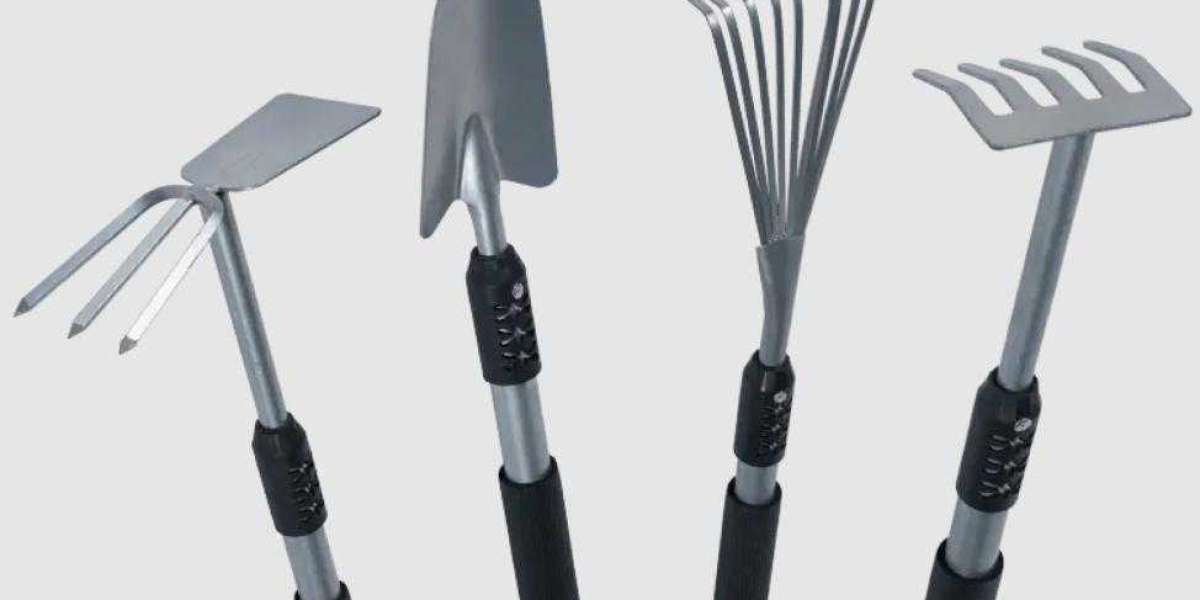
Within a competitive Floral Garden Tools Set Factory, the choice of materials is not merely a technical specification—it is a fundamental business strategy that defines the product's market position, performance, and price point. The decision between using cost-effective carbon steel or premium stainless steel, or selecting between basic plastic and reinforced fiberglass handles, involves a complex calculation of durability, user experience, manufacturing cost, and final retail value. Striking this balance is essential for a factory aiming to serve diverse market segments, from value-conscious retailers to boutique horticultural brands.
Analyzing the Core Trade-Offs: Cutting Edges
The most critical material choice lies in the cutting components: blades for pruners, trimmers, and trowels. Here, the classic dichotomy is between high-carbon steel and stainless steel.
High-Carbon Steel (Tool Steel): This is the traditional choice for cost-efficiency and superior edge performance. It is less expensive to source and process than stainless alloys. When properly heat-treated in the factory, it achieves an exceptional hardness (Rockwell rating), allowing it to take and hold a razor-sharp edge ideal for clean cuts that promote plant health. However, its primary drawback is susceptibility to rust and corrosion if not meticulously cleaned and dried after use. To mitigate this while keeping costs low, a factory will often apply a protective coating—such as epoxy, powder coating, or a thin layer of chrome plating—to the finished blade. This provides adequate protection for casual users but may wear off over time with heavy use or abrasion.
Stainless Steel (e.g., 440C, 5Cr15MoV): This represents the premium track. The addition of chromium (at least 10.5%) provides inherent corrosion resistance, a major selling point for gardeners who use tools frequently or in damp conditions. While generally more expensive, it simplifies the manufacturing process by eliminating the need for secondary anti-corrosion coatings. The trade-off historically involved a slight sacrifice in maximum achievable hardness and edge retention compared to the finest carbon steels. Modern factory techniques, however, such as specialized quenching and tempering of martensitic stainless grades, have narrowed this gap significantly. For a high-end tool set, a factory might use a laminated blade—a core of ultra-hard steel (for the edge) clad in layers of softer, tough stainless steel (for shock absorption and rust resistance)—combining the best properties but at a significantly higher cost.
Handle Materials: Ergonomics, Durability, and Perception
The handle material directly impacts user comfort, tool longevity, and perceived quality.
Economy Tier: Basic Polymers and PVC. Injection-molded plastic or vinyl-dipped handles are extremely cost-effective to produce in high volume. They can be color-matched to sets and provide a basic non-slip grip. However, they may become brittle over time with UV exposure, offer limited ergonomics, and feel less substantial.
Mid-Tier: Reinforced Composites and TPR. To balance cost with performance, a factory often turns to fiberglass-reinforced polypropylene (FRP) or thermoplastic rubber (TPR). FRP handles are lightweight, strong, and weather-resistant, offering a significant durability upgrade over basic plastic without the cost of wood or premium rubber. TPR overmolds provide soft, comfortable, and secure gripping zones.
Premium Tier: Natural Hardwood and Advanced Elastomers. For premium sets, the factory selects materials that enhance the user experience. Handles made from sustainably sourced, oil-treated hardwood (like ash or hickory) offer classic aesthetics, natural vibration damping, and a warm feel. High-density foam or sophisticated co-molded elastomers are engineered for all-day comfort, with contoured shapes that reduce hand fatigue. While these materials increase unit cost, they create tangible value that justifies a higher price point and builds brand reputation.
Strategic Product Line Architecture
A sophisticated Floral Garden Tools Set Factory does not choose one path exclusively. It develops a tiered product line architecture. A basic 3-piece set for mass-market discounters might feature carbon steel blades with epoxy coating and PVC-dipped handles, optimized for competitive pricing. A mid-range 5-piece set for garden centers might upgrade to coated stainless blades and FRP/TPR handles. The flagship professional or gift sets would showcase full stainless or laminated steel blades with hardwood or advanced ergonomic handles, often finished with custom branding.