
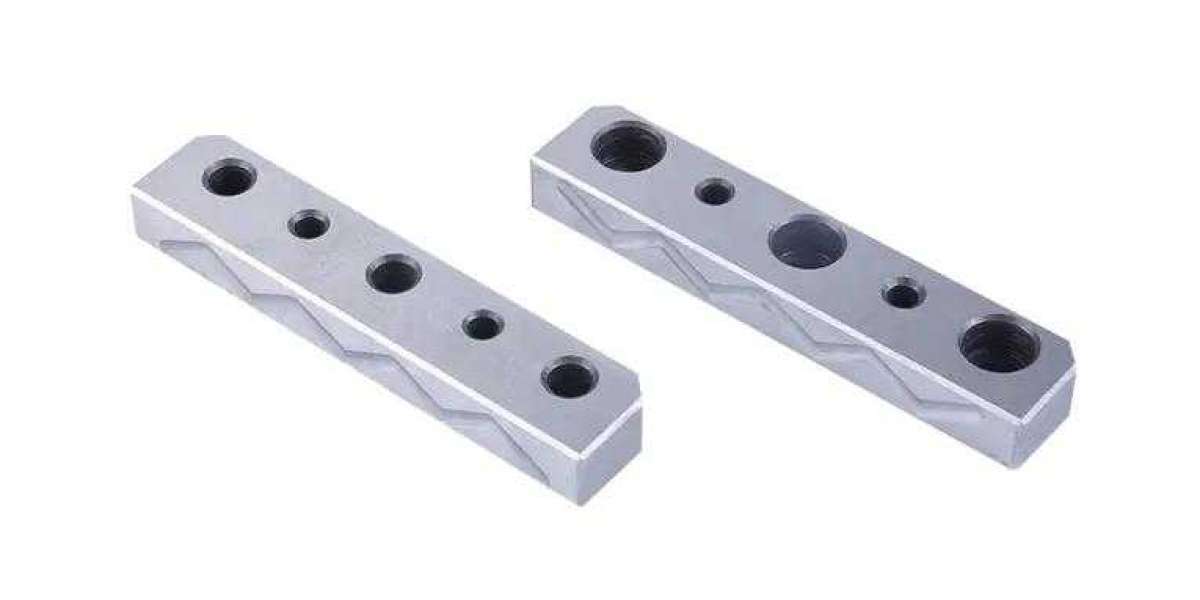
In the demanding realms of metrology, tool and die making, and ultra-precision machining, a precision positioning block is more than a passive reference; it is the foundational datum upon which entire measurement systems or machining setups are built. Its defining characteristic—dimensional and geometric constancy—is perpetually challenged by a universal force: thermal expansion. Even a minuscule temperature change can induce enough dimensional drift in a standard metal block to invalidate micro-level tolerances. Therefore, the foremost design principle for a truly reliable precision positioning block is the deliberate engineering of thermal stability, ensuring its critical dimensions remain effectively invariant across a defined operational temperature range.
Material Selection: The First Line of Defense
The battle for stability begins at the atomic level with material choice. Standard tool steels, while hard and durable, have a relatively high coefficient of thermal expansion. For applications where even micron-level drift is unacceptable, designers turn to specialized materials.
Invar (Fe-Ni alloy): This is the classic choice for ultimate thermal stability. Its uniquely low coefficient of thermal expansion is a fraction of that of steel. A precision positioning block machined from Invar will exhibit negligible dimensional change with normal workshop temperature fluctuations, making it ideal for master calibration artifacts or fixtures used in temperature-variable environments.
Granite and Ceramics: For metrology bases and surface plates, black granite is preferred not for zero expansion, but for its exceptional thermal mass and low conductivity. It heats and cools very slowly, acting as a thermal buffer that dampens rapid ambient temperature swings. Advanced ceramics like zirconia offer excellent dimensional stability, hardness, and corrosion resistance, though they can be more brittle.
Engineered Composites and Hybrid Designs: Modern solutions may involve composites with carbon fiber or other reinforcements designed to have a net-zero expansion in specific directions. Alternatively, a hybrid precision positioning block might use a stabilized steel core for structural integrity, strategically sleeved or plated with a low-expansion material at critical reference surfaces.
Geometric and Structural Design for Neutral Stress
Material choice alone is insufficient. The block's geometry must be designed to minimize internal stress and promote uniform thermal behavior. A core principle is symmetry. An asymmetrical design with varying cross-sections will heat and cool unevenly, causing warping or twisting—a phenomenon known as thermal gradient-induced distortion. Designers aim for a compact, balanced form where mass is distributed evenly around the center.
Furthermore, the block must be stress-relieved both in its raw material state and after every significant machining step. Residual stress locked in from forging, rolling, or rough machining will seek to relieve itself over time or when temperature changes, causing the block to "move" unpredictably. A rigorous thermal cycling process (stabilization) is often part of the manufacturing protocol for a high-grade precision positioning block.
Isolation and Environmental Integration
The design principles extend to how the block interacts with its environment. Mounting points are critical. A precision positioning block must be isolated from the thermal expansion of the machine table or stand it sits on. This is achieved through kinematic mounting—using three precisely located, minimal-contact points (balls on trihedral grooves, for example) that define its position without constraining it. This allows the block to expand or contract freely without being stressed or distorted by the different thermal growth of its support structure.