
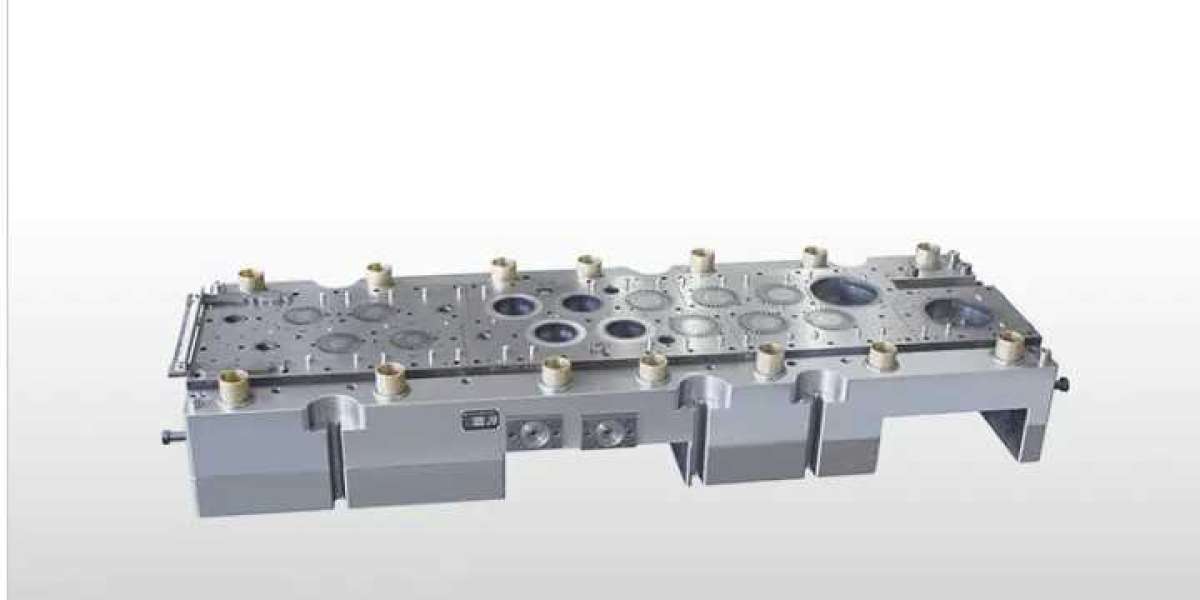
A Stamping Mold is not just a tool sitting inside a press machine. For factories producing motor cores, it directly shapes daily output, tooling plans, and how often production gets interrupted. Buyers searching for a Stamping Mold Factory usually have one clear goal: stable production that fits real product needs, not just drawings on paper.
This is one of the most common concerns from purchasing and engineering teams. Changing molds too often slows down production and raises tooling costs.
Some progressive stamping molds are designed to do more than one job. For example, a double-row precision progressive die with a three-slot stator layout and a two-slot rotor layout allows different products to be produced without changing molds. This approach improves mold utilization and helps factories control development budgets, especially during product upgrades or model expansion.
For buyers, this means fewer interruptions and smoother production planning.
Customization is often mentioned, but buyers usually want clear answers. A reliable Stamping Mold Factory should be able to work with customer drawings and samples, not just standard sizes.
In real production, motor core requirements vary widely. Stamping molds may need to process stator and rotor laminations from Φ12 to Φ720mm. Functional needs can include self-locking structures, skewed slots, or punched step holes within a defined diameter range.
The ability to choose single-row, double-row, or multi-row mold structures — along with forming processes like straight stacking with internal riveting or skew slot internal riveting — gives buyers more control over final product behavior.
Short test runs and long-term mass production have very different demands. Buyers often look beyond the mold itself and focus on how it fits future output.
High-speed progressive stamping molds are commonly selected for motor core production because they support continuous operation. When mold design allows stable stacking and consistent lamination alignment, factories can plan longer production cycles without frequent tool adjustments.
This is where experience from a Stamping Mold Factory becomes visible, not in brochures, but on the production floor.
A well-designed Stamping Mold reduces the need for repeated development when product dimensions change slightly. It also helps teams avoid rebuilding tooling for each new motor model, which is a practical concern for factories serving multiple customers or industries.
Before confirming a Stamping Mold order, buyers usually clarify size ranges, functional requirements, and forming processes. Clear communication at this stage helps avoid mismatches between drawings and actual production needs.
Working with a Stamping Mold Factory that understands motor core structures and progressive die behavior makes these discussions more efficient and more aligned with real manufacturing conditions.