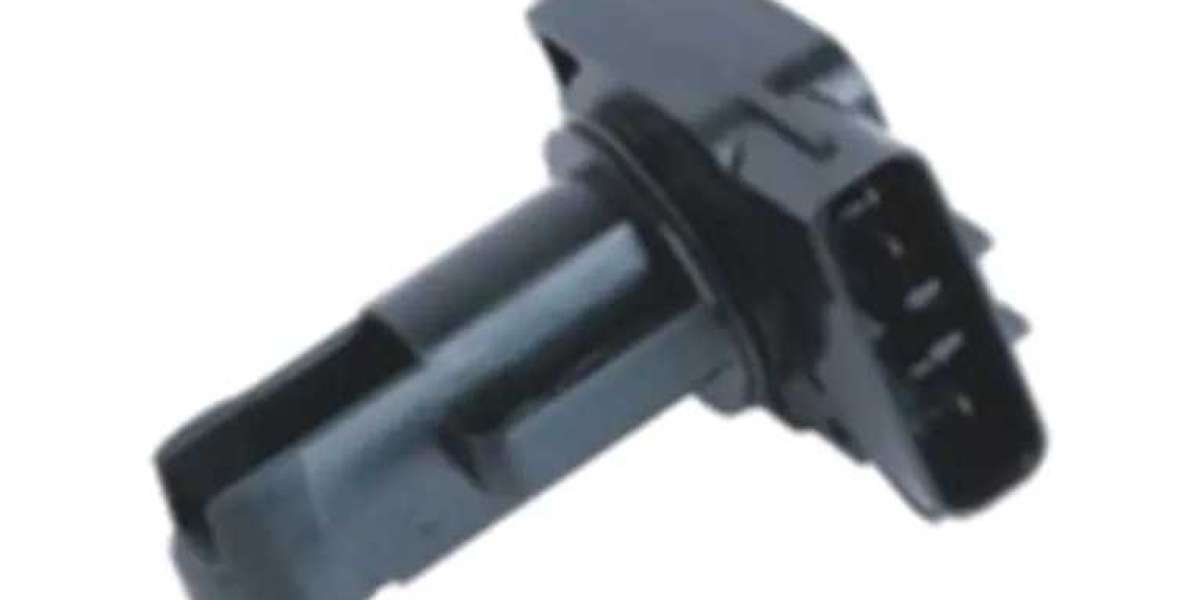
The air flow meter, identified by part number 197400-3021, is a critical sensor in the engine management system of specific Mazda vehicles. As a hot-wire or hot-film type Mass Air Flow (MAF) sensor, its job is to provide the Engine Control Unit (ECU) with a precise, real-time measurement of the volume and density of air entering the engine. When this sensor begins to fail or provides inaccurate data, it disrupts the ECU's fundamental calculation for the air-fuel ratio. This single point of failure can manifest in a range of drivability symptoms that, while sometimes subtle at first, progressively degrade performance, fuel economy, and emissions. Recognizing these common symptoms is the first step in diagnosing a problematic 197400-3021 unit.
Primary Symptom: Erratic Idle and Stalling
One of the most immediate and noticeable signs is an unstable or rough idle. The engine may surge up and down rhythmically or feel like it's about to stall when stopped at a light. In more severe cases, the engine may actually stall shortly after starting or when coming to a stop. This occurs because at idle, the engine's air intake is at its lowest and most sensitive. A faulty air flow meter may send an incorrect, fluctuating, or abnormally low signal to the ECU. The ECU, believing less air is present than actually is, reduces the fuel injector pulse width accordingly. This creates a lean condition (too much air, not enough fuel), causing misfires and instability. Conversely, an abnormally high signal can cause a rich, sooty idle.
Drivability Issues: Hesitation, Jerking, and Power Loss
Under load, the symptoms become more pronounced. Drivers often report a distinct hesitation or flat spot during acceleration, especially when pressing the throttle from a standstill or when attempting to pass. The vehicle may jerk or stumble as if it's not getting fuel. There can also be a general and noticeable loss of engine power, making the vehicle feel sluggish and unresponsive. This happens because the ECU uses the MAF signal as a primary load input. A faulty signal during high airflow demand causes incorrect fuel delivery, leading to incomplete combustion and a lack of power. The engine may struggle to reach higher RPMs smoothly.
Fuel Economy Degradation and Emission Problems
A failing 197400-3021 sensor frequently leads to decreased fuel efficiency. While sometimes the ECU can default to a rich, fuel-wasting "limp mode" to protect the engine, more often, the inconsistent air-fuel mixture leads to inefficient combustion, wasting fuel. Over time, this poor combustion also increases harmful exhaust emissions. A vehicle with a bad MAF sensor may fail an emissions test due to elevated levels of hydrocarbons (HC) or carbon monoxide (CO).