
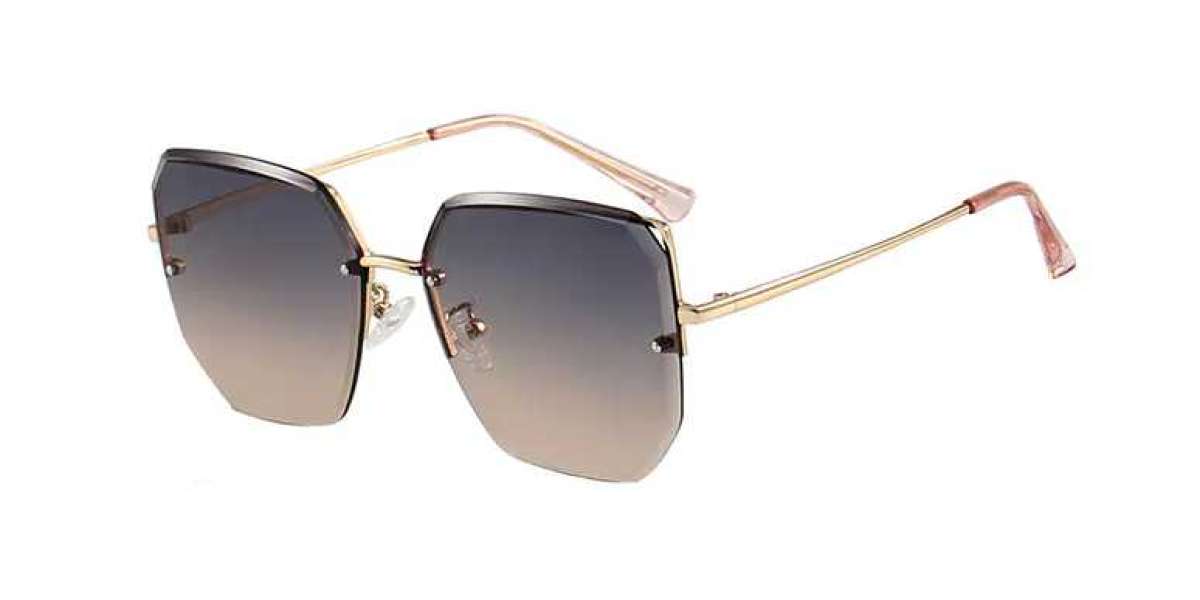
In the pursuit of the perfect sunglass lens, material choice is paramount. While polycarbonate has long been the standard for impact resistance, and glass for optical clarity, nylon lenses—specifically those made from a material like Grilamid TR-90 or other polyamide formulations—have emerged as a premium choice that bridges these qualities. For high-end and performance-oriented sunglasses, the selection of nylon over polycarbonate represents a deliberate trade-up, prioritizing superior optical fidelity alongside robust durability, albeit often at a higher cost.
Optical Clarity: The Pursuit of Visual Fidelity
The primary advantage of nylon lenses lies in their exceptional optical clarity and lower chromatic aberration. Polycarbonate, while incredibly tough, is an amorphous polymer that can exhibit inherent optical distortions, especially in higher-prescription or complex curved lenses. This can manifest as slight blurring or "swimming" at the edges of the visual field.
Nylon, in contrast, can be engineered to have a more uniform molecular structure and a higher Abbe value. The Abbe value measures the material's tendency to disperse light into its constituent colors (chromatic aberration). A higher Abbe value means less color fringing and sharper, truer color perception. For the wearer, this translates to crisper vision, better contrast, and reduced eye strain during prolonged use. The material's inherent properties also allow it to be molded with excellent surface fidelity, resulting in lenses that are optically precise from center to edge, a critical factor in wraparound sport and aviator styles.
Impact Resistance: A Different Kind of Toughness
Polycarbonate is famously impact-resistant—it is the material of choice for safety glasses and visors. Nylon lenses are also highly impact-resistant, but their strength profile differs. Nylon is a flexible and resilient material. When struck, it is more likely to bend and absorb energy elastically rather than fracture.
This creates a nuanced advantage: while polycarbonate may resist a penetrating impact slightly better in lab tests (like the ANSI Z87.1 high-velocity test), nylon's flexibility makes it exceptionally resistant to cracking and shattering from blunt force, twisting, or dropping. This makes nylon lens sunglasses ideal for active use where the frames might be flexed or sat upon—the lens is more likely to pop out of the frame intact than to break. For sports like cycling, fishing, or skiing, where falls are possible, this combination of optical clarity and resilient toughness is invaluable.
Weight and Comfort
Nylon has a lower density than polycarbonate. This means nylon lenses are significantly lighter for a given lens thickness and curvature. Reduced weight directly enhances wearing comfort, eliminating pressure points on the nose and ears during all-day use. This is a critical advantage for premium eyewear, where comfort is as important as performance.
Surface Hardness and Coatings
A historical drawback of nylon was its softer surface, making it more prone to scratches than polycarbonate. However, modern premium nylon lenses solve this through advanced hard coating technologies. Multiple layers of diamond-like carbon (DLC) or silicon-based hard coats are applied via vacuum deposition, creating a surface hardness that rivals or exceeds that of coated polycarbonate. These same processes seamlessly integrate 100% UV protection, anti-reflective coatings, and hydrophobic/oleophobic layers, making high-end nylon lenses as durable and feature-rich as any on the market.