
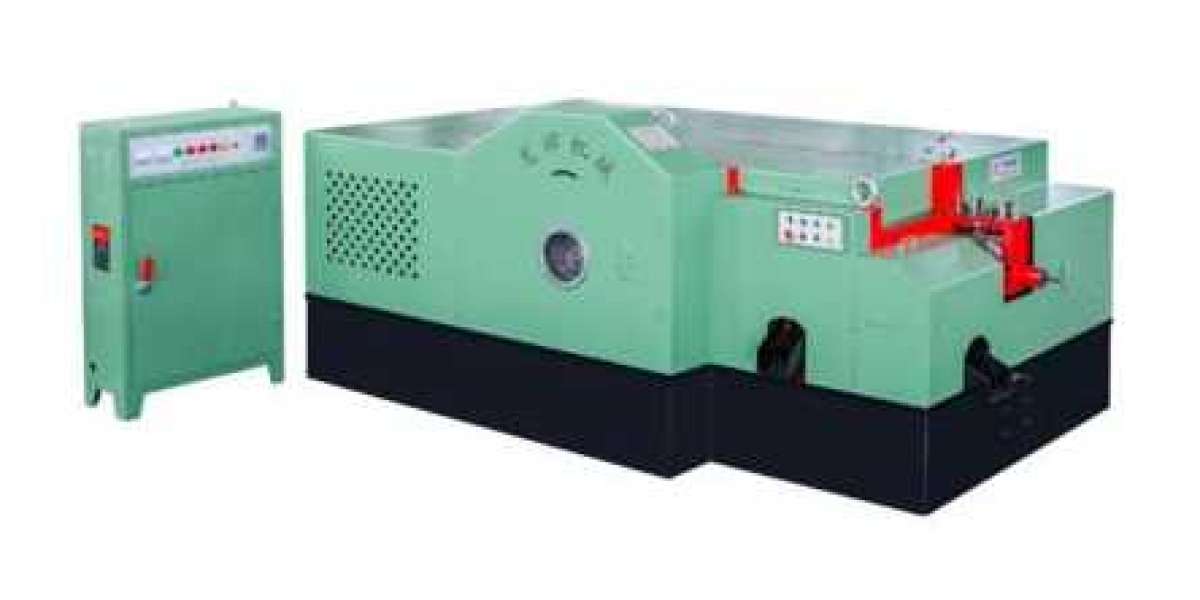
The Engine of Modern Metal Fastener Fabrication
A multi-station cold heading forming machine is a highly specialized type of metal forming press that transforms coils of wire into near-net-shape parts through a series of progressive dies, all without the application of heat. This process, known as cold forging or cold heading, displaces and reshapes metal under tremendous pressure at room temperature. The “multi-station” aspect is its defining feature: a single piece of wire is sequentially cut and then forged through several discrete stations within one machine cycle, each performing a specific operation like extruding, upsetting, trimming, or piercing. This creates complex geometries—such as bolts, screws, rivets, and specialized pins—with exceptional efficiency, material utilization, and mechanical strength.
The Sequential Forging Process: A Journey Through Stations
The operation begins with a coil of wire, typically steel, aluminum, or copper alloy, which is straightened and fed into the machine. A cut-off mechanism shears a precise length of wire (the “blank”). This blank is then transferred, often by a mechanical finger or a rotating transfer arm, through a sequence of die stations. A standard machine might have 2 to 5 stations. In the first station, the blank is often pre-formed or initially upset. Subsequent stations perform the core forming work: forward extrusion to reduce diameter and lengthen a section, backward extrusion to create a cavity (like a socket head), or upsetting to gather material and form a head. The final station typically involves trimming or piercing to finish the part’s shape. Each station employs a punch and a die, with the wire being reshaped a little more at each step until the final component is ejected, all in a fraction of a second per cycle.
The Metallurgical and Economic Advantages
The cold heading process offers profound benefits over machining from bar stock. Material Savings is paramount; the process reshapes rather than cuts away metal, achieving material yield rates often exceeding 95%, drastically reducing waste. Enhanced Mechanical Properties are equally critical. The high-pressure plastic deformation refines the metal’s grain structure, following its new contours. This work hardening increases tensile strength, fatigue resistance, and surface hardness of the finished part, often eliminating the need for secondary heat treatment for many applications. Furthermore, the continuous, high-speed nature of the process—with outputs reaching hundreds of pieces per minute—makes it extraordinarily cost-effective for high-volume production, forming the backbone of the global fastener industry.
Tooling, Precision, and Integration
The heart of the machine’s capability lies in its progressive tooling system. The dies and punches, usually crafted from high-grade tungsten carbide or hardened tool steel, must withstand extreme cyclic stresses. Their design and manufacture require sophisticated engineering to manage metal flow, prevent defects like cracking or seizing, and ensure dimensional accuracy across millions of cycles. Precision is maintained through rigid machine construction, precise transfer mechanisms, and consistent lubrication of the wire. Modern machines are integrated with full automation systems: servo-driven wire feeders, in-process monitoring sensors, and automated sorting and packaging at the output end. This creates a lights-out production cell capable of running with minimal direct operator intervention, focused on monitoring and quality sampling.