
The Unseen Foundation of Machining Accuracy
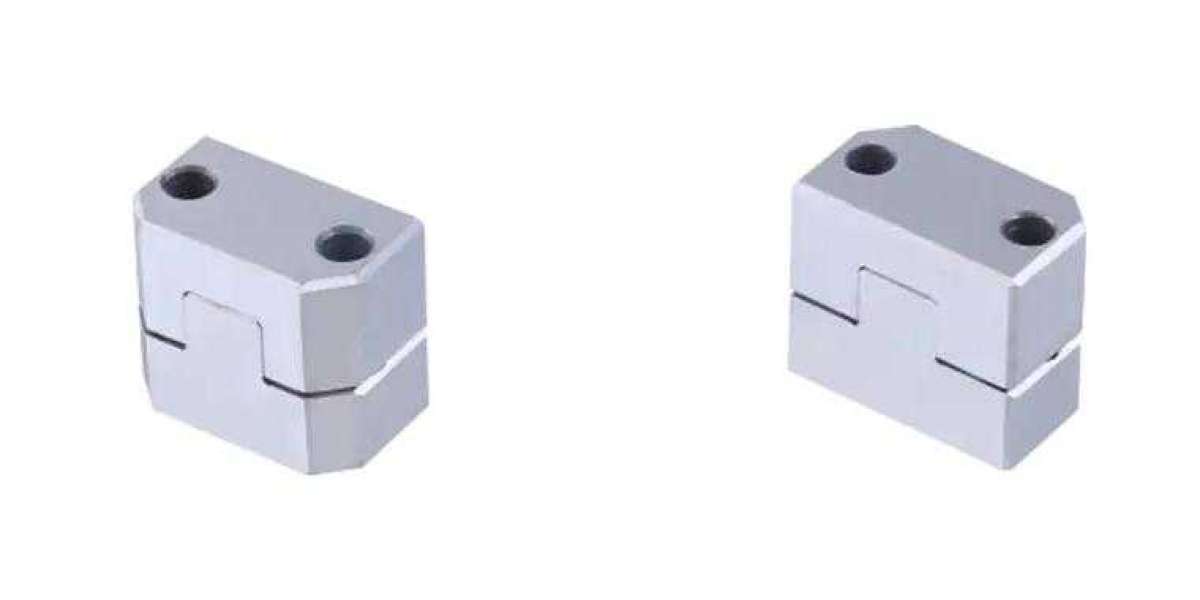
A precision positioning block is a fundamental, yet critical, tool in metrology and machining, serving as a physical embodiment of geometric truth on the workshop floor. These hardened and ground blocks provide known, ultra-accurate reference surfaces—faces, edges, and sometimes bores—against which workpieces are aligned, tools are set, and measuring instruments are verified. Unlike active tools, their value lies in passive perfection: their unwavering flatness, squareness, and dimensional stability enable machinists and inspectors to transfer geometric datums from a drawing or digital model directly to the physical realm, establishing the foundational "zero" from which all other measurements and cuts are derived.
The Anatomy of Precision: Materials and Manufacturing
Creating such a block is an exercise in high-level manufacturing and metrology. They are typically machined from blocks of high-quality, stress-relieved tool steel (like A2 or O1), granite for thermal stability, or tungsten carbide for extreme wear resistance. The journey to precision begins with rough machining, followed by a hardening process. The critical final stages involve precision grinding on specialized surface and creep-feed grinders, where microscopic layers of material are removed under tightly controlled conditions. The final surface finish is often achieved through lapping or honing, resulting in a mirror-smooth, wear-resistant face. The verification of this perfection is as important as its creation, performed in a controlled metrology lab using laser interferometers, high-accuracy CMMs, and electronic levels to certify flatness, parallelism, and squareness to tolerances within microns (µm) or even sub-micron levels.
Functional Taxonomy: From Universal to Application-Specific
The family of these tools includes several standardized forms. The ubiquitous 1-2-3 block is a rectangular parallelepiped with nominal dimensions of 1" x 2" x 3", featuring a grid of threaded holes. It is a versatile workhorse for setup, spacing, and height referencing. Angle plates and cubes provide guaranteed 90-degree references for squaring workpieces on a milling machine table or surface plate. V-blocks are designed to securely hold and center cylindrical workpieces. Beyond these standards, custom positioning blocks are engineered for specific, high-volume production tasks. These may incorporate dedicated locating pins, precisely bored holes for tooling balls, or unique contours that match a specific part, becoming a permanent, trusted component of a dedicated fixture or gauging station.
Application in Practice: Enabling Setup and Verification
On the shop floor, these tools are indispensable. In CNC machining, a block is used to set tool length offsets by touching off a tool against its known top surface. It can be secured to a machine table to act as a positive stop for workpiece alignment. In quality control, inspectors use master-grade blocks to verify the accuracy of micrometers, calipers, and height gauges. On a Coordinate Measuring Machine (CMM), a calibrated block is used as a "quick-check" artifact to perform routine performance verification of the machine's volumetric accuracy and probe repeatability before critical part inspection begins. In modular fixturing systems, they are the essential building blocks, allowing for the rapid construction of complex, yet accurate, workholding setups from a kit of standard components.