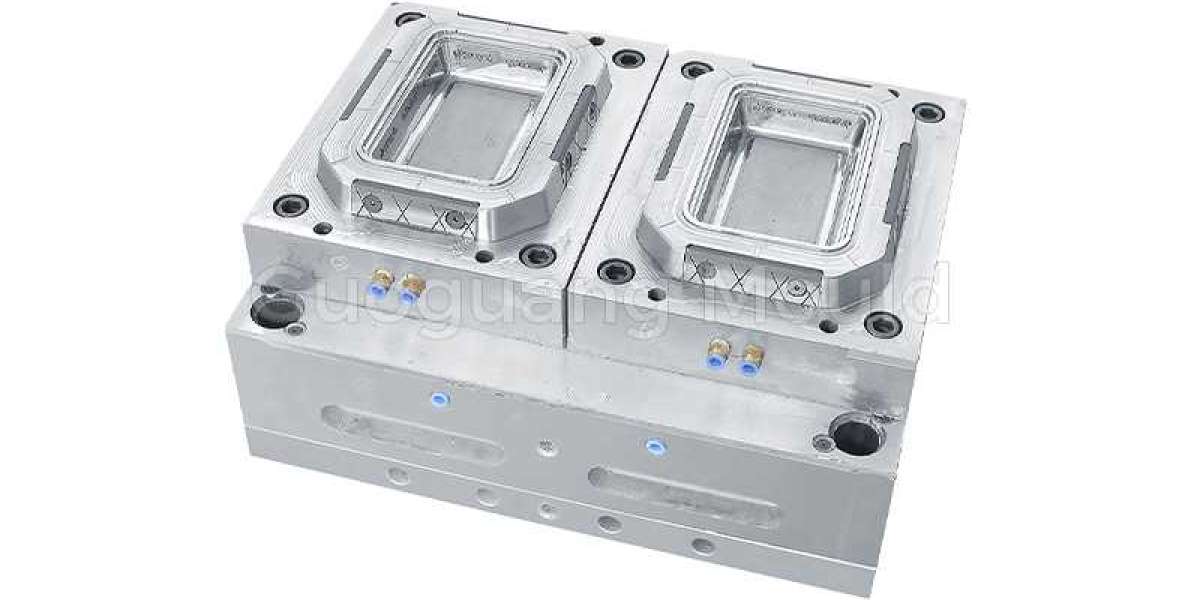
A Plastic Injection Thin Wall Food Container Mold is a precision-engineered tooling system specifically designed to produce lightweight, disposable food packaging through high-speed injection molding processes. The defining characteristic of this mold technology is its ability to fill extremely thin cavities—typically ranging from 0.3mm to 0.8mm wall thickness—with molten thermoplastic resin under high pressure and velocity. The mold construction utilizes hardened tool steels, typically P20, H13, or stainless steel grades, machined to mirror finishes that impart glossy or textured surfaces to finished containers. Cavity configurations range from single-impression tooling for prototype development to high-cavitation systems producing 4, 8, 16, or more containers per machine cycle. The architecture of a Plastic Injection Thin Wall Food Container Mold must accommodate rapid filling rates exceeding 500 millimeters per second while maintaining uniform material distribution and preventing flow hesitation that would result in incomplete fill or visible flow lines.
The mold assembly comprises two primary halves: the cavity side forming the container exterior, and the core side defining the interior volume. Precision guide pins and bushings ensure absolute alignment during each closure cycle, critical for achieving consistent wall thickness distribution. The parting line location is carefully calculated to facilitate ejection while minimizing visible witness marks. Hot runner systems are extensively employed, maintaining polymer in a molten state from machine nozzle to gate, eliminating cold runner waste and reducing cycle times. Valve gate sequencing technology controls the timing of melt entry at multiple drop positions, balancing flow fronts and preventing air entrapment. The gate vestige—the small remnant where material entered the cavity—is minimized through precise valve pin control, an important aesthetic consideration for stackable containers.
Cooling system design represents a significant engineering investment in Plastic Injection Thin Wall Food Container Mold construction. Conformal cooling channels, machined to follow the contour of the container shape, provide uniform heat extraction essential for minimizing cycle times and preventing warpage. Baffles, bubblers, and thermal pins are strategically deployed in deep core sections. Ejection systems employ either stripper plate mechanisms that push uniformly around the container perimeter or multi-point ejector pin arrays designed to distribute release forces without marking visible surfaces. The sophisticated integration of thermal management, material delivery, and mechanical actuation within Plastic Injection Thin Wall Food Container Mold systems enables the high-volume production of disposable food packaging with the speed and consistency demanded by global food service industries.