
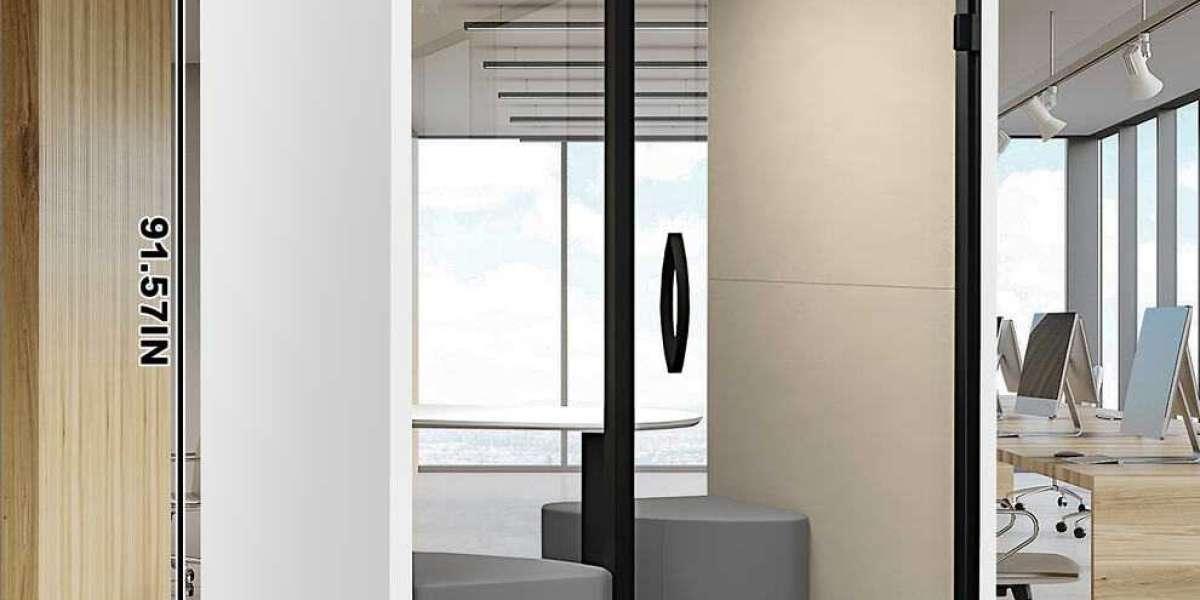
For decades, the humble drum booth has been the unsung hero of countless recordings and late-night practice sessions. Whether you are a session player tracking in a world-class facility or a weekend warrior trying not to wake the kids, the drum booth represents the critical intersection of acoustics, architecture, and sheer necessity. But as anyone who has ever wrestled a 22-inch kick drum up a flight of stairs knows, not all drum booth solutions are created equal.
The Problem That Refuses to Stay Quiet
The fundamental challenge of the drum booth has always been physics. As noted in recent technical analyses, drum sounds encompass a wide frequency range and carry significant energy, making complete isolation extraordinarily difficult to achieve. Low frequencies, in particular, have a nasty habit of finding their way through walls, floors, and ceilings, coupling with the structure of a building and radiating into spaces you never intended to share your rudiments with.
Traditional approaches to building a drum booth often involved permanent construction: framing stud walls, packing them with mineral wool, layering mass-loaded vinyl, and praying that the neighbors appreciated your Bonham tribute. While effective, this approach is expensive, irreversible, and utterly useless if you relocate. The industry has clearly heard the collective sigh of drummers everywhere, and the response has been nothing short of transformative.
The Modular Revolution
Enter the modular drum booth. Companies like Studiobricks—founded by a saxophone player who grew frustrated with available options—have pioneered precision-engineered systems that assemble without tools. These booths arrive on pallets and can be erected in under an hour, with joints so tight they would make a pyramid builder weep. The genius of this approach lies not just in its immediacy, but in its adaptability. Need more space in six months? Purchase extension modules in 300mm increments. Moving to a new studio? Dismantle the entire drum booth and take it with you .
This philosophy of flexibility extends across the market. WhisperRoom’s drum booth package, weighing in at over 2,600 pounds for the 8’ x 8’ model, offers double-wall construction and achieves impressive isolation while remaining technically relocatable. The message is clear: permanence is no longer a prerequisite for performance.
Acoustic Innovation Inside the Box
What separates an ordinary enclosed space from a legitimate drum booth is what happens inside. Modern designs have moved far beyond simply stapling foam to drywall. The WhisperRoom drum booth package, for instance, includes LENRD bass traps and customizable acoustic foam arrays, allowing drummers to tune the room’s response rather than merely dampen it
Perhaps most intriguing is recent patented technology featuring cycloidal interior surfaces—rippled, wave-like walls designed to create destructive interference patterns at targeted frequencies. Rather than relying solely on absorption, these advanced drum booth designs use geometry to cancel problematic standing waves before they develop. It is a shift from passive to active acoustic management, and it signals a future where the drum booth is not just a silencer but a sonic instrument in its own right.
The Portable Paradigm
Not everyone needs—or has space for—a room-sized enclosure. ClearSonic’s IsoPac and HomePac series have redefined the drum booth for the home user. These systems combine acrylic drum shields with free-standing Sorber absorption baffles, creating what might be described as a drum booth-adjacent environment that focuses on containing sound at the source With Noise Reduction Coefficient (NRC) ratings of 1.00 and volume reduction claims of 50-70%, these portable solutions offer a compelling compromise for drummers who cannot dedicate a full room to their craft.
The MiniMegaPac configuration, with 360-degree acrylic coverage and 130 square feet of absorption, represents the ceiling of this approach . While not a sealed drum booth in the traditional sense—manufacturers openly acknowledge ventilation gaps—these systems dramatically reduce bleed and practice volume while consuming a fraction of the real estate.
Materials Matter
The modern drum booth is also a showcase for advanced material science. Historical patents from 2010 describe panels of bonded rockwool with densities of 5 to 9 pounds per cubic foot, achieving NRC ratings above 1.20 at frequencies below 125 Hz. Today, we see fabric-wrapped rigid fiberglass, mass-loaded vinyl composites, and recycled rubber flooring integrated directly into drum booth specifications
Even the floor—historically an afterthought—has received attention. Reviewers have noted that boominess can be mitigated by packing mineral wool beneath the booth or adding barrier mat layers . Modern drum booth packages increasingly include isolated flooring systems or IEP (Impact Energy Protection) mats as standard equipment .
The Complete Ecosystem
Perhaps the most telling sign of the drum booth‘s maturity is the ecosystem surrounding it. No longer are these simply empty boxes. Contemporary drum booth offerings include integrated HVAC with baffled vent paths, silent airflow systems, and HEPA filtration. Cable management has evolved from gaffer-taped gaps to slotted rubber passages and multi-jack panels supporting XLR, USB, and ¼” connections
Lighting kits with customizable color temperatures and wireless remote controls have transformed the drum booth from a utilitarian closet into a creative sanctuary. When a touring drummer proudly installs their WhisperRoom next to the kitchen and declares they can “practice at ALL TIMES,” it is evident that the drum booth has transcended its purely functional origins.
Looking Forward
As patent activity remains robust and manufacturers continue refining modular, collapsible, and acoustically intelligent designs, the trajectory is clear. The drum booth is becoming simultaneously more sophisticated and more accessible. It is no longer a compromise or a luxury—it is a legitimate tool for artistic expression and neighborly coexistence.
frankie
33 مدونة المشاركات