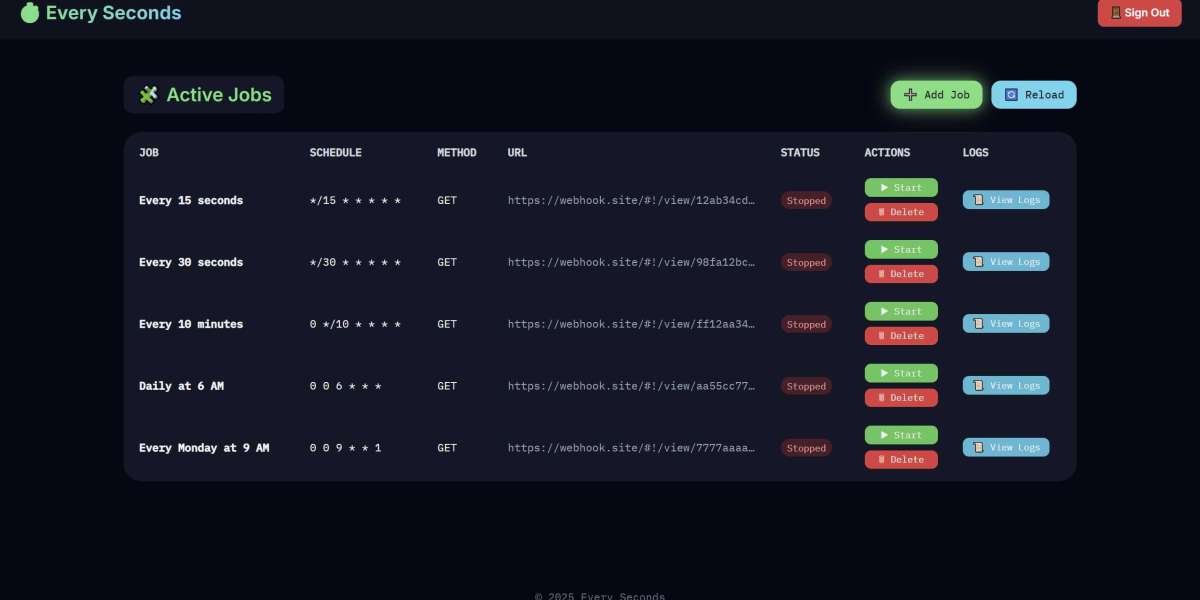
For most of us, cron jobs have been a reliable staple of server automation. They quietly run scripts, clear caches, send reports, or handle backups. And for decades, the one-minute minimum interval has been perfectly sufficient.
But modern applications often need more. Real-time dashboards, instant notifications, live analytics waiting a full 60 seconds can feel slow. That’s where the concept of running cron every second comes into play, offering developers a way to achieve faster, more responsive automation.
Understanding the Limitations of Traditional Cron
Traditional cron, the tool most developers first encounter, operates on a schedule defined by five fields: minute, hour, day of month, month, and day of week. Noticeably absent is a seconds field, which is why the shortest interval you can schedule is one minute.
Even when you try expressions like:
Your PHP script runs only once every minute. For many tasks, this is fine. But for applications that need low-latency automation, waiting 60 seconds can feel like an eternity.
Why Developers Need Cron Every Second
Some tasks truly benefit from second-level scheduling:
1. Real-Time Monitoring
Server health checks, uptime monitoring, and system alerts often require instant detection of anomalies. A one-minute interval could delay critical responses.
2. Queue and Job Processing
Applications with high-volume job queues need frequent processing to avoid bottlenecks. Every-second execution reduces latency and keeps workflows moving smoothly.
3. API Polling and Integration
When integrating with external APIs that provide time-sensitive data, more frequent polling ensures your system stays up-to-date.
4. Notifications and Alerts
Live notifications for chat systems, social platforms, or financial apps often rely on near real-time triggers. Every-second cron allows events to be processed quickly, improving user experience.
How to Implement Cron Every Second
Since standard cron doesn’t natively support seconds, developers often rely on workarounds or specialized services:
Continuous Loop Scripts
A simple solution is a persistent script that executes tasks in a loop with a one-second delay:
// Execute task
sleep(1);
}
While effective, this approach requires careful handling to avoid memory leaks or crashes. It also needs a process manager like Supervisor to keep it running reliably.
External Scheduling Services
Services like Every Seconds provide second level scheduling without server-level complexity. You can trigger scripts or webhooks every second, even if your hosting provider limits traditional cron to once per minute.
These platforms are especially useful for developers:
- On shared hosting
- Building prototypes
- Running lightweight automation tasks without complex infrastructure
Practical Tips for Safe Every-Second Cron
Running tasks every second increases system load significantly. A few strategies can help manage this:
- Optimize Your Script: Keep code lightweight and efficient. Avoid unnecessary database queries or long loops.
- Implement Locks: Prevent overlapping executions by using file locks or database flags.
- Monitor Performance: Keep an eye on CPU, memory, and database load to avoid overloading the server.
- Error Handling: Ensure logging and monitoring are in place, so failures don’t go unnoticed.
Cron Every Second vs Event-Driven Architecture
It’s important to note that every-second cron is not always a replacement for event-driven systems. Modern frameworks and architectures allow tasks to be triggered instantly in response to events using queues, workers, or WebSockets.
However, those systems require infrastructure: message brokers, queue workers, and persistent connections. For smaller projects, prototypes, or situations where infrastructure is limited, cron every second is a simpler, practical alternative.
The Growing Interest in Second-Level Cron
Search trends and developer discussions show growing interest in terms like:
- cron every second
- cron every seconds
- cron php every second
Developers are looking for ways to reduce latency, improve responsiveness, and make automation feel instant. Tools and platforms supporting every-second cron meet this demand without adding complexity to server management.
Final Thoughts
Cron jobs are a fundamental part of automation. For decades, a one-minute interval was more than enough. But today’s applications move faster, users expect quicker responses, and sometimes 60 seconds is too long to wait.
Running cron every second isn’t about rushing for speed’s sake. It’s about precision, responsiveness, and user experience. By understanding the limitations, choosing the right implementation method, and monitoring your scripts carefully, you can take your automation to a whole new level one second at a time.