Across the United States—from the fast-paced streets of New York City to the coastal communities of Miami, from the growing tech centers of Seattle to the healthcare hubs of Boston—many people may be living with a hormonal condition without even realizing it. Hyperprolactinemia, a condition characterized by abnormally high levels of prolactin in the blood, is more common than many assume. One of the major underlying causes is pituitary gland tumors (like prolactinomas), which can disrupt hormone balance and lead to symptoms such as menstrual irregularities and infertility in women.
Fortunately, the treatment of hyperprolactinemia, after which doctors often prescribe medications like cabergoline tablets to lower prolactin levels caused by pituitary gland tumors (like prolactinomas), help restore normal menstrual cycles, support fertility in women, and manage hormone-related complications. Interestingly, cabergoline is also used in the treatment of neurological disorders such as Parkinson’s disease, highlighting its broader role in medical therapy. While medications have improved outcomes for many patients, lifestyle factors, daily habits, and environmental influences can still contribute to hormonal imbalances. Understanding these risk factors can help individuals identify possible triggers and take proactive steps toward better hormonal health.
Understanding Prolactin and Why It Matters
Prolactin is a hormone produced by the pituitary gland that serves a very specific biological purpose — it encourages breast growth and milk production during and after pregnancy. In healthy individuals who are not pregnant or breastfeeding, prolactin levels stay relatively low. Problems arise when the body produces too much of it without a valid biological reason.
Elevated serum prolactin — meaning prolactin levels detected in the bloodstream that exceed the normal range — can disrupt the delicate hormonal balance that governs your reproductive health, mood, bone density, and sexual function. The consequences are far-reaching. In fact, hyperprolactinemia is a well-documented cause of infertility in both men and women across the United States, often going undetected for years while couples struggle to conceive.
What Causes High Prolactin in Females — and Males?
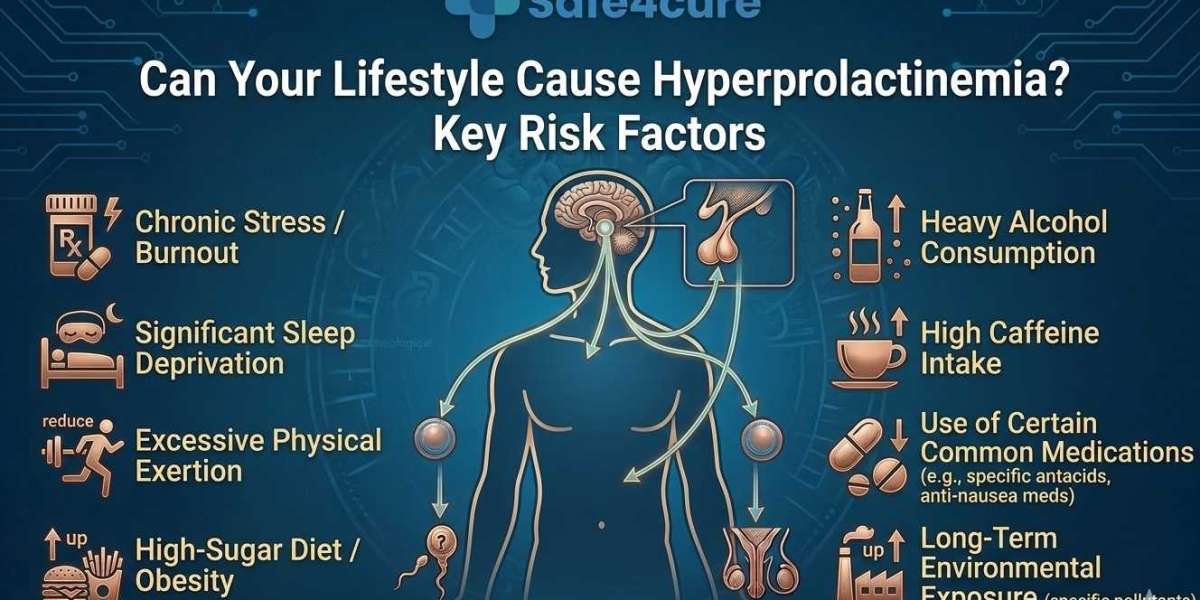
When patients ask what causes high prolactin in females, the answers span a wide spectrum — from medical conditions and medications to everyday lifestyle habits. Understanding this is critical because some of these causes are within your direct control. Here is a detailed look at the most significant risk factors:
1. Chronic Stress and Elevated Serum Prolactin
Stress is one of the most underappreciated contributors to hormonal imbalances, including elevated serum prolactin. When you are under prolonged physical or psychological stress, your body enters a state of alarm that disrupts normal hormonal signaling. Physical stressors — such as intense overtraining in athletes, extreme calorie restriction, or recovering from illness or surgery — can temporarily spike prolactin levels. Emotional stress, which is increasingly common in high-pressure cities like Chicago and Washington D.C., can similarly dysregulate the hypothalamic-pituitary axis, the control center that manages prolactin release. While stress-induced elevations are usually temporary, chronic, unmanaged stress can contribute to persistently high prolactin over time.
2. Medications — A Major and Often Overlooked Risk Factor
One of the most significant lifestyle-adjacent causes of elevated serum prolactin is the use of certain medications. Many Americans are on long-term prescription drugs that, as a side effect, push prolactin levels into abnormal territory. The most common culprits include:
- Antipsychotic medications such as risperidone and haloperidol, which block dopamine — the brain chemical that naturally keeps prolactin in check
- Antidepressants, particularly older tricyclics and some SSRIs
- Blood pressure medications like verapamil and methyldopa
- Gastrointestinal drugs such as metoclopramide and domperidone, commonly used for acid reflux and nausea
- Opioid pain medications used for chronic pain management, which are increasingly prescribed across the U.S.
If you are on any of these medications and experiencing symptoms of hormonal imbalances such as irregular periods, unexplained milk discharge, or low libido, it is worth discussing prolactin testing with your doctor.
3. Pregnancy and Nipple Stimulation
It is well established that pregnancy and nipple stimulation are natural and significant drivers of prolactin release. During pregnancy, rising estrogen levels signal the pituitary gland to ramp up prolactin production — this is how the body prepares to encourage breast growth and milk production for the newborn. After delivery, every time a baby nurses, nipple stimulation sends signals to the brain to release more prolactin, sustaining the milk supply.
What is less widely known is that persistent or excessive non-breastfeeding nipple stimulation — whether from clothing friction, self-stimulation, or certain intimate practices — can also temporarily raise prolactin. While this is generally not enough to cause clinically significant hyperprolactinemia on its own, it can complicate interpretation of borderline lab results if not disclosed to a healthcare provider.
4. Diet, Alcohol, and Lifestyle Habits
Certain dietary and lifestyle choices can influence prolactin regulation, even if indirectly. High consumption of foods rich in estrogen-like compounds (phytoestrogens), such as soy products in very large quantities, has been linked in some studies to elevated serum prolactin in susceptible individuals. Chronic heavy alcohol use can disrupt liver function and alter hormone metabolism, potentially contributing to hormonal imbalances including higher prolactin. Sleep deprivation is another underrated factor — prolactin levels naturally peak during sleep, and chronically disrupted sleep patterns can throw this cycle off balance. In cities like Los Angeles and Miami, where hectic lifestyles and late nights are common, these lifestyle-driven hormonal shifts are more prevalent than many realize.
5. Underlying Health Conditions That Amplify Risk
Several chronic medical conditions raise prolactin as a secondary effect. Hypothyroidism is one of the most common — when the thyroid is underactive, the body produces more thyrotropin-releasing hormone (TRH), which also stimulates prolactin release. Chronic kidney disease impairs the body's ability to clear prolactin from the bloodstream, leading to gradual accumulation. Liver cirrhosis and polycystic ovary syndrome (PCOS) are also associated with hormonal imbalances that can include elevated prolactin. These connections make routine hormonal screening especially important for anyone already managing one of these conditions.
Hyperprolactinemia Is a Well-Documented Cause of Infertility
Among the most serious consequences of untreated elevated prolactin is its impact on fertility. Hyperprolactinemia is a well-documented cause of infertility because excess prolactin suppresses the hormones needed for ovulation in women and sperm production in men. Across fertility clinics in cities like Boston, Seattle, and Minneapolis, prolactin screening is now a standard part of the initial infertility workup — a practice that has helped countless couples identify and treat this reversible condition before spending years on more invasive fertility interventions.
The encouraging news is that once the cause is identified and appropriate treatment of hyperprolactinemia begins — typically with dopamine agonist medications — prolactin levels normalize in the majority of patients, and fertility often returns naturally. This makes early identification of lifestyle and medical risk factors all the more important.
What the Data Tells Us About Risk in the United States
In the United States, the growing rates of psychiatric medication use, opioid prescriptions, and stress-related disorders have quietly contributed to a rise in medication-induced and lifestyle-linked hyperprolactinemia. The condition is estimated to affect roughly 0.4% of the general U.S. population, but rates climb significantly among specific groups — including women of reproductive age, individuals on long-term antipsychotics, and patients with untreated thyroid disorders.
Major endocrinology centers at universities in cities like Houston, Baltimore, and San Francisco are actively studying the intersection of lifestyle factors and pituitary hormone regulation. Their findings continue to reinforce the importance of not just treating elevated serum prolactin medically, but also addressing the lifestyle and environmental contributors that may be fueling it in the first place.
What You Can Do to Lower Your Risk
While not all causes of hyperprolactinemia are within your control, several lifestyle adjustments can meaningfully reduce your risk or support the treatment of hyperprolactinemia:
- Manage stress proactively through regular physical activity, mindfulness practices, and adequate sleep — aiming for seven to nine hours per night
- Limit alcohol intake, as chronic heavy drinking can contribute to hormonal imbalances over time
- Get thyroid function tested regularly, especially if you have a family history of thyroid disease or are experiencing fatigue and weight changes
- Review all current medications with your doctor if you are experiencing symptoms of hormonal imbalances — a simple medication switch may be all that is needed
- Ask for a prolactin blood test if you are struggling with infertility, irregular periods, or unexplained sexual health changes — early detection makes treatment far more straightforward
Conclusion
The relationship between your lifestyle and your hormones is more powerful than most people realize. While not every case of hyperprolactinemia stems from daily habits, many risk factors — from chronic stress and poor sleep to certain medications and underlying health conditions — are well within your power to identify and address. Understanding what causes high prolactin in females and males, recognizing the role of pregnancy and nipple stimulation, and appreciating how elevated serum prolactin can silently drive hormonal imbalances and infertility — all of this knowledge puts you in a stronger position to protect your health and with the help of Caberlin 0.25mg which is helpful in treating hyperprolactinemia which is easily available at Safe4Cure. If you have concerns, start with a conversation with your doctor and a simple blood test. Because when it comes to your hormonal health, what you do not know can quietly hold you back — and what you do know can set you free.